
Level 1 sweep and inspection to the NFPA 211 annual standard - flue, crown, cap, and flashing checked and photographed
Chimney sweep logs do not sweep chimneys. They loosen some creosote - which then falls where a brush and vacuum still have to collect it.
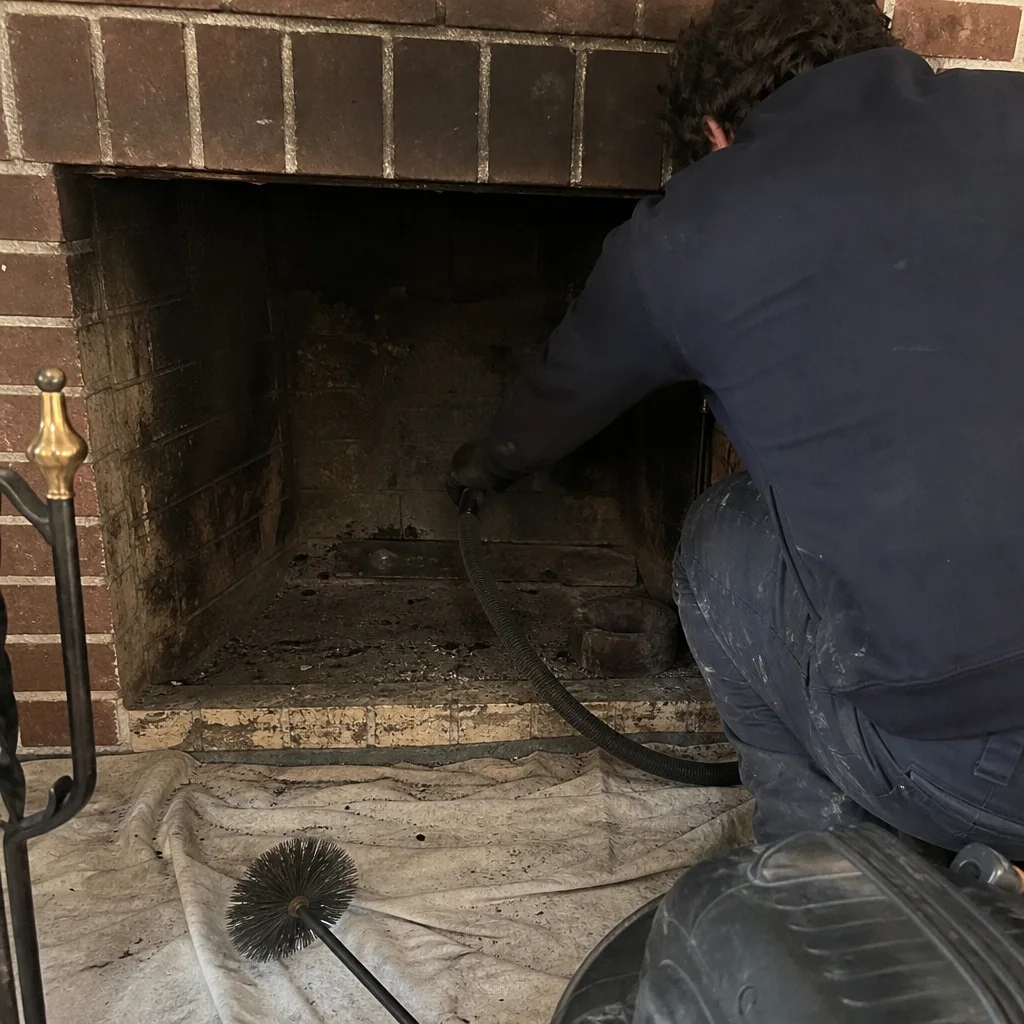 Before
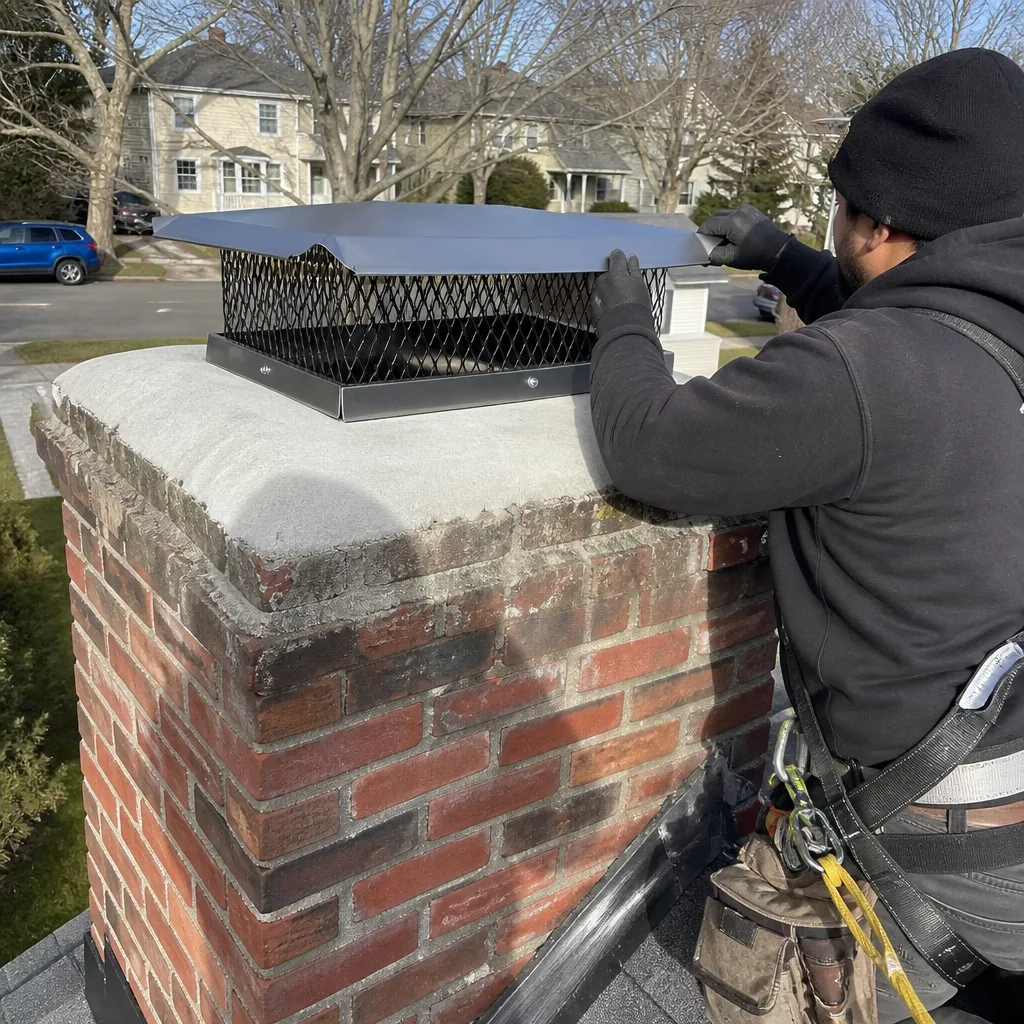 After
After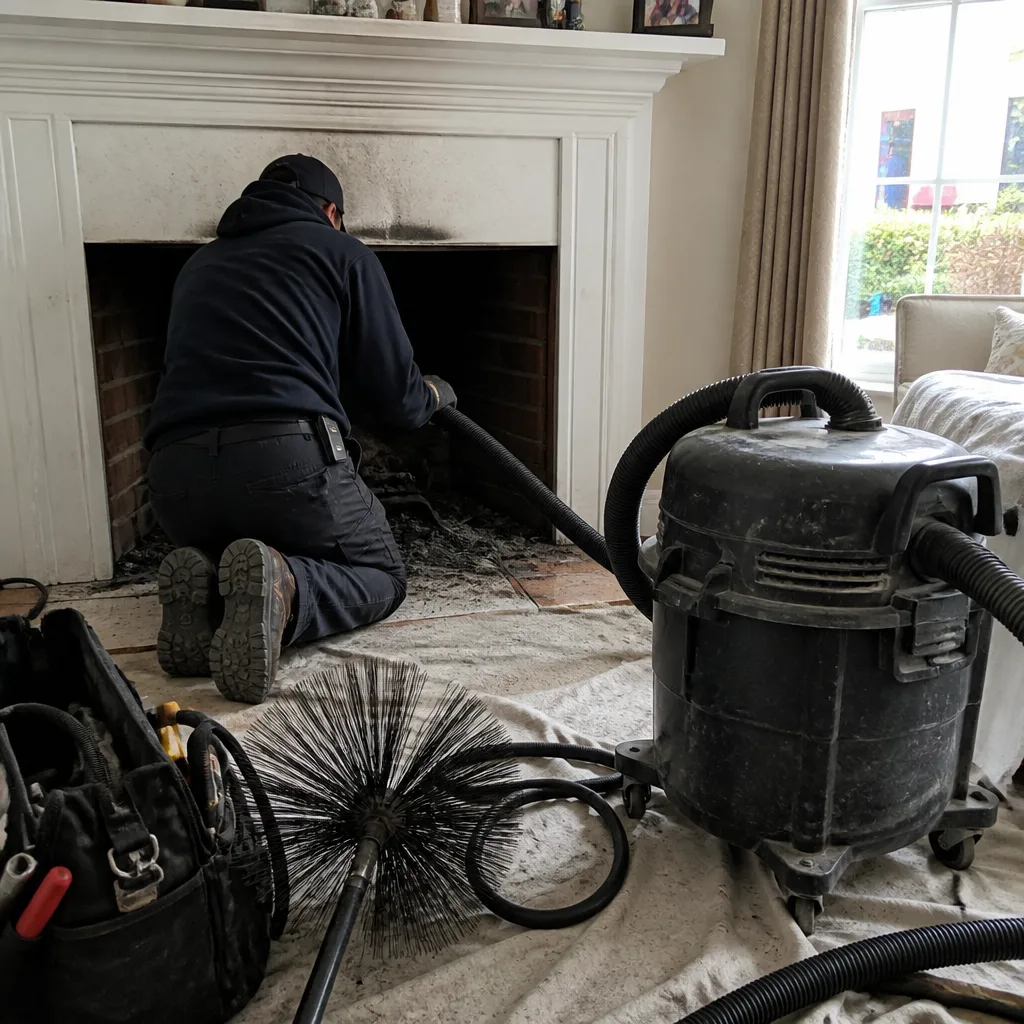 Before
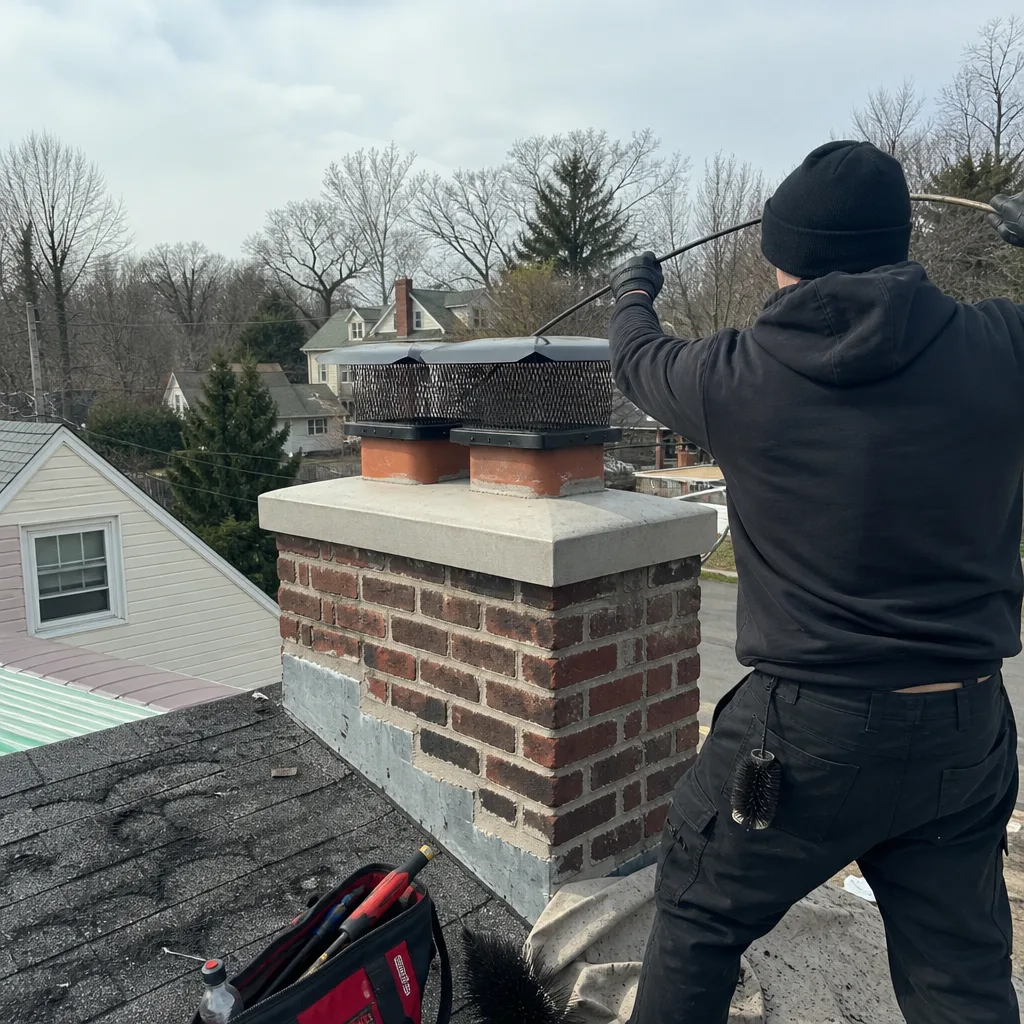 After
After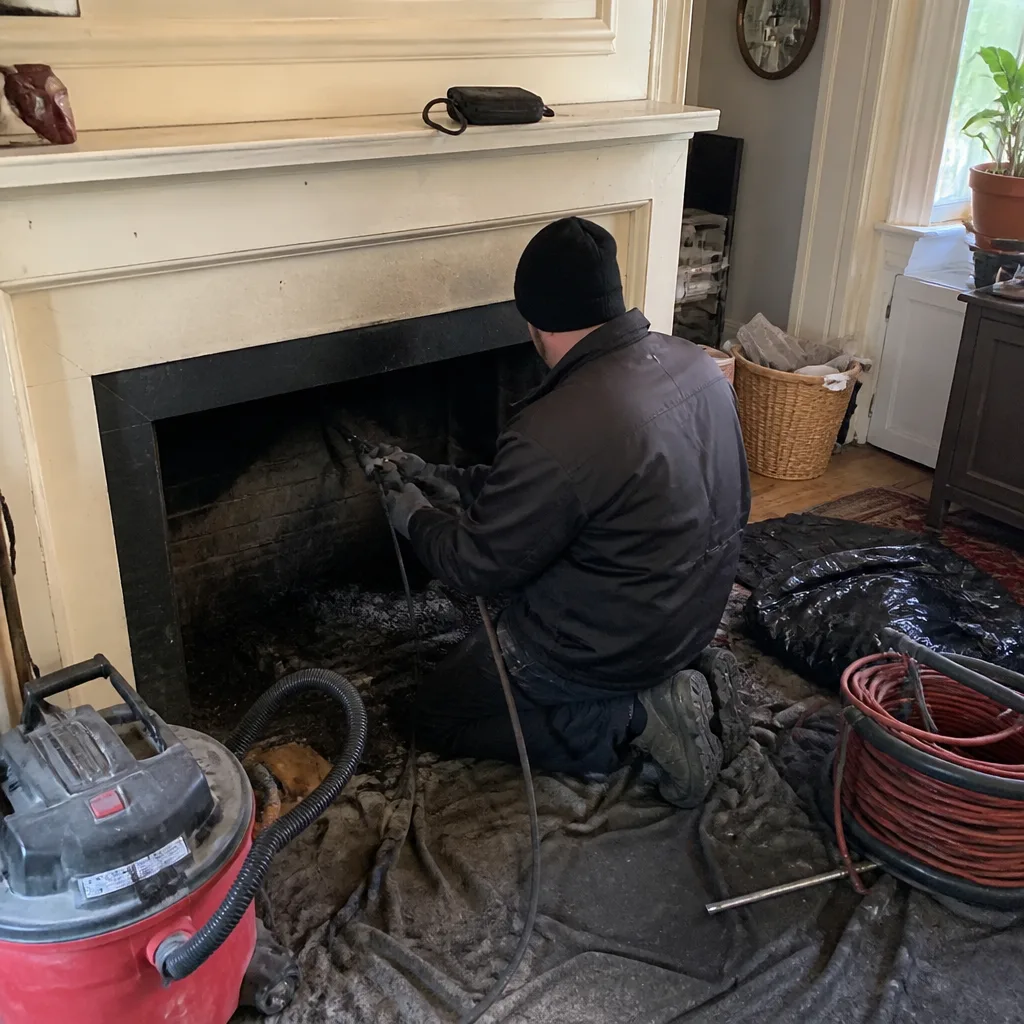 Before
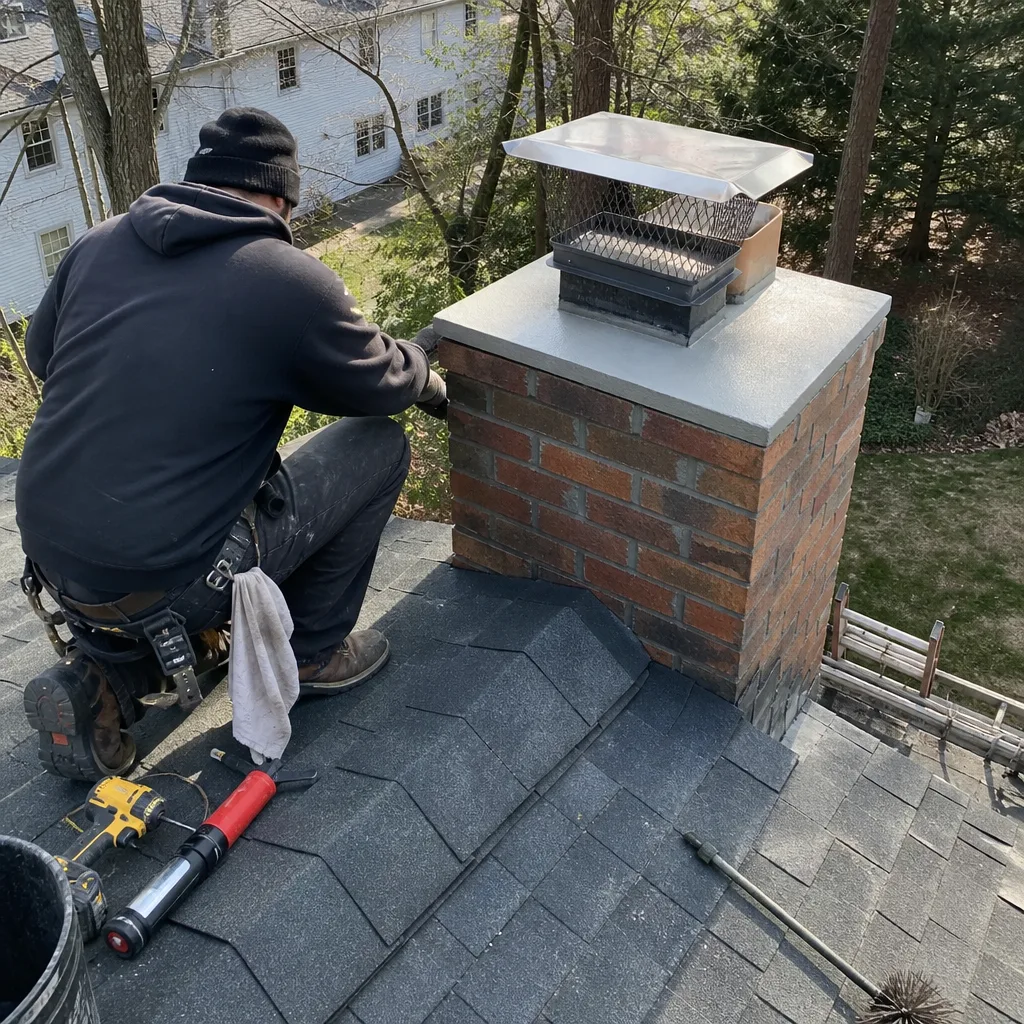 After
AfterCopperfield Crown Repair: The White Plains Owner’s Guide
A Copperfield crown repair in White Plains typically runs $380-$720 installed, depending on whether we’re resurfacing the existing crown or pouring a new one. We stock Copperfield-compatible crown repair materials on every truck and can usually complete the job in a single visit once we’ve had eyes on it. Most homeowners in White Plains notice the problem after a hard rain, when water starts finding its way down the flue or they spot fresh cracking on the chimney top.
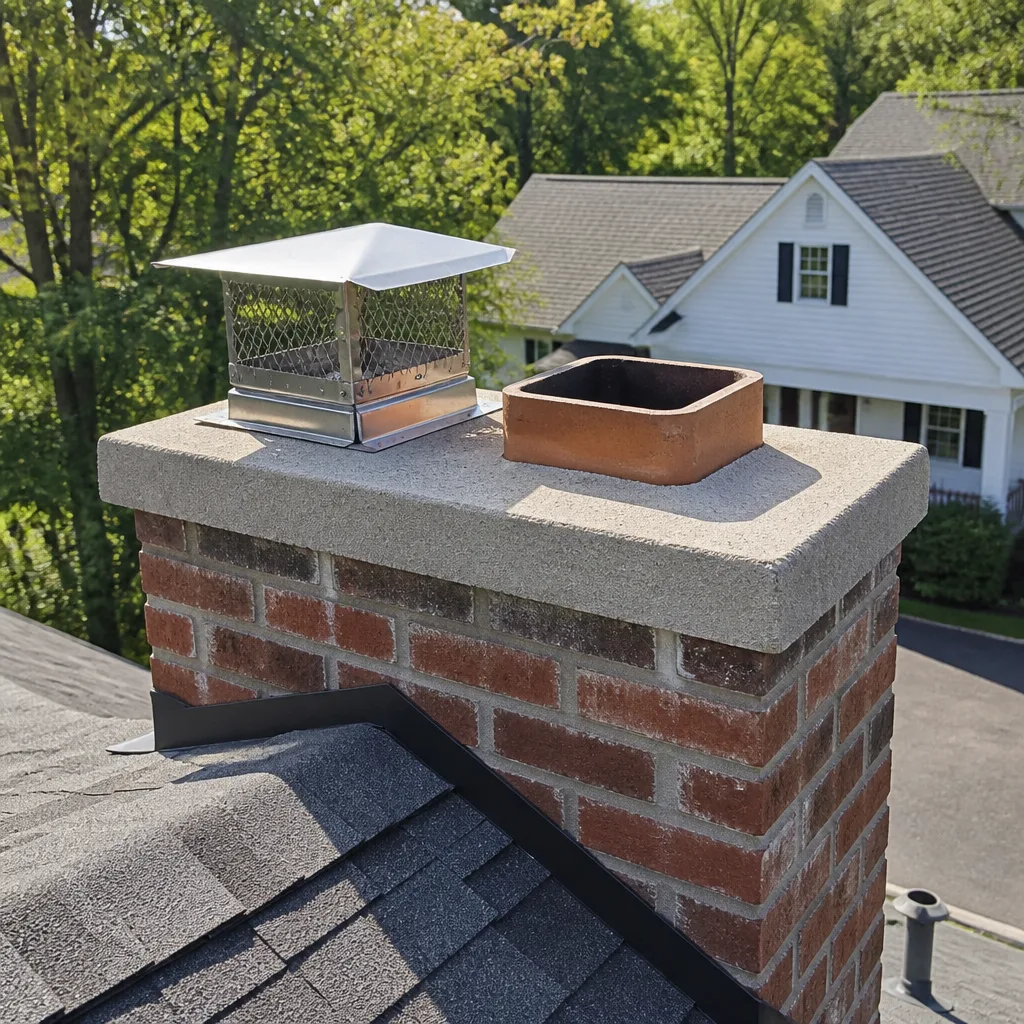
The crown is the concrete slab that seals the top of your chimney, sloped to shed water away from the flue. On Copperfield systems, it’s sized to match specific flue dimensions and must maintain that slope to keep water from pooling. In White Plains, where freeze-thaw cycles run from late October through April, a compromised crown doesn’t stay compromised for long - it gets worse every season.
Which Copperfield Models This Applies To
Copperfield crowns are not universal. The brand produces crowns in specific diameters keyed to their chimney cap and flue liner pairings: 8×8, 8×13, 13×13, and 13×18 inches are the common residential sizes we see in Westchester County. The part number is stamped on the underside lip of the existing crown if you can access it safely, or we can measure the flue opening and crown overhang during a Level-2 camera inspection.
Here’s where owners get tripped up: Copperfield’s older 600-series caps require a crown with a 2-inch minimum overhang past the chimney brick. Their newer 800-series caps need 2.5 inches. Mix the two and the cap won’t seat properly, or worse, it’ll channel water behind the crown edge instead of off it. We’ve replaced crowns in White Plains where a previous installer used a generic 13×13 that cleared the flue but left the overhang short by half an inch. Two winters later, the spalling brick told the rest of the story.
We source OEM Copperfield crowns when the model is current and the sizing is critical. For discontinued series, we fabricate to spec using professional-grade refractory concrete with a compressive strength of 4,500 psi - higher than the OEM mix, which is why we back it the same way. We’re an independent service provider, not affiliated with Copperfield, so we choose the material based on what will last, not what moves fastest through a supply chain.
Signs Your Copperfield Crown Repair Is Failing
- Hairline cracks running from the flue edge to the crown perimeter. These start as shrinkage cracks in the concrete, then widen as water enters, freezes, and expands. In White Plains, a crack you can fit a dime into in October becomes a quarter-width by March.
- Pooling water on the crown surface after rain. A proper Copperfield crown is cast with a minimum 3/12 slope. When that slope settles or erodes, water sits instead of sheds. Standing water means it’s already finding seams.
- Pieces of concrete flaking off the crown edge. This is spalling, and it means freeze-thaw damage has reached the aggregate layer. Once spalling starts, the crown loses mass fast - we’ve seen 2 inches of material gone in a single White Plains winter.
- Dampness or water stains on the firebox walls or nearby ceiling. The crown is your chimney’s umbrella. When it fails, water follows the flue liner down, sometimes traveling horizontally through the smoke chamber before it shows itself. By the time you see the stain, the crown has been leaking for a while.
- The crown has separated from the top course of brick, creating a visible gap. This is often a bonding failure between the crown concrete and the brick below, accelerated by age and thermal cycling. It’s also the point where squirrels and raccoons start testing the structure.
Replacement Cost & What’s Included
| Service | Typical Range in White Plains |
|---|---|
| Crown resurfacing (minor cracks, intact structure) | $380-$520 |
| Partial crown rebuild (spalling, <30% material loss) | $480-$620 |
| Full crown replacement (pour new, reseat flue) | $580-$720 |
| Level-2 camera inspection with photo report | $89 (waived with repair) |
What drives the range is access and extent. A single-story ranch in the Fisher Hill area with a straight shot from the driveway costs less than a three-story colonial off North Street where we need staging. The price above includes removal of the failed crown, surface prep, forming and pouring with professional-grade refractory concrete, proper slope and overhang to Copperfield spec, and sealing with a vapor-permeable crown coat. We also inspect the flue liner and cap seating while we’re up there - no point in a perfect crown sitting on a cracked liner.
Every crown repair carries our 90-Day Done Right Promise in writing. If it’s not right, we come back. No paperwork to dig up, no arguing. The number on the estimate is the number on the invoice.
DIY or Call Us?
There’s a safe middle ground here. You can walk the perimeter of your house with binoculars and confirm whether cracks, spalling, or pooling are visible from the ground. You can check your firebox for dampness after rain. What you should not do is climb onto the roof to measure or attempt a pour.
Crown work requires working at height on a surface that may already be structurally compromised. The concrete itself is heavy - a 13×18 crown weighs roughly 90 pounds green, and it’s awkward. More importantly, forming and pouring a crown that sheds water correctly demands a practiced eye for slope and overhang. We’ve been called to White Plains homes where a homeowner’s well-intentioned patch with mortar mix created a bowl instead of a peak, trapping water against the flue for two years.
If the crown’s doing its job, you won’t think about it. That’s exactly where we want to leave things. Call (914) 603-1360 and we’ll get a technician out to photograph the condition and give you a plain-English verdict on whether it needs attention now or can wait until after burning season.
FAQs
A properly installed crown in our climate typically lasts 15-25 years, though we’ve seen OEM Copperfield crowns fail in 8 years when the initial pour had insufficient slope or the chimney was exposed to sustained northwest wind without a cap. Annual inspection catches the early cracks before freeze-thaw finishes the job. Call (914) 603-1360 for an exact quote - estimates are free.
Yes, if the cracks are surface-level, the crown retains its slope, and there’s no spalling or separation from the brick. We clean the surface, inject a flexible crown sealant into the cracks, and coat with a vapor-permeable membrane. This buys 5-10 years when caught early. If the crown has lost structural integrity, repair is a Band-Aid and we won’t recommend it. Call (914) 603-1360 for an exact quote - estimates are free.
Most Copperfield crown replacements we complete in White Plains take 3-4 hours from setup to cleanup, assuming standard access and no hidden flue liner damage. The concrete needs 24-48 hours to cure before heavy rain, which we account for in scheduling. Our technicians carry the forms and materials to finish in one visit. Call (914) 603-1360 for an exact quote - estimates are free.
We stock refractory concrete, forming materials, and crown sealant on every service vehicle. For OEM Copperfield crowns on current models, we verify dimensions on-site and pull from our White Plains warehouse stock, or fabricate to spec if the series is discontinued. Either way, you’re not waiting on a parts order. Call (914) 603-1360 for an exact quote - estimates are free.
Written by Russell Haines, Owner, Hearthstone Chimney Co. at Hearthstone Chimney Co., serving White Plains and nearby areas.